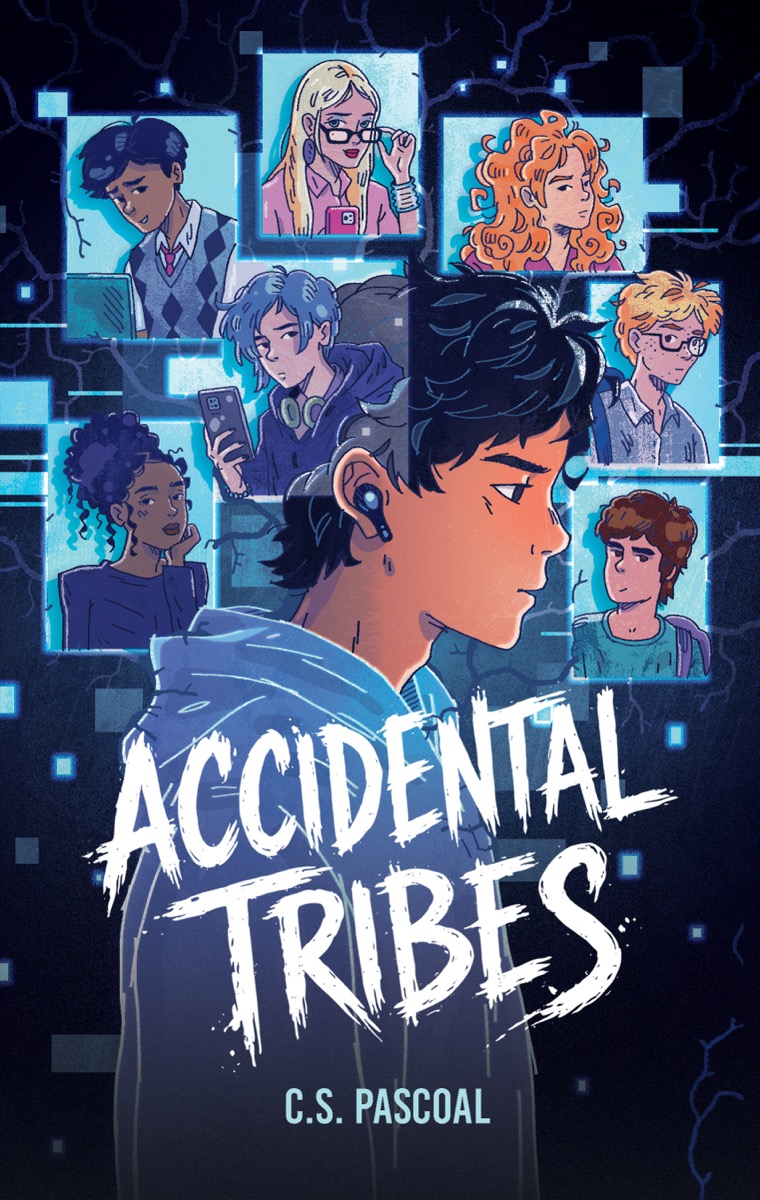
Eight students share the spotlight in Accidental Tribes, each carrying different pressures into the same room. C. S. Pascoal discusses creating the ensemble and balancing its competing voices.
Which character came to you first?
Surprisingly, the students in Accidental Tribes came to me as an ensemble from the start. I often felt they lived somewhere and were allowing me to peek into their lives from time to time so I could share their stories.
That sense of encountering them together shaped how I understood the book. Each student had an individual presence, and the relationships between them were part of the story’s energy. A character can reveal something different depending on who is beside them. Discovering the ensemble meant paying attention to those changing dynamics as well as to each person’s private experience.
Did any of the eight students surprise you while writing?
What surprised me about the students in Accidental Tribes was that sense of discovering people who already existed. They had contradictions, vulnerabilities, and ways of protecting themselves. I wanted my readers’ first impressions to remain open to revision as they gradually discovered them, too.
There is something powerful about realizing that a behavior you initially interpreted one way may have another explanation. Understanding that explanation does not automatically excuse the behavior. It gives you more to consider. I wanted the students to hold that complexity, so readers could care about them while still questioning their decisions.
How did you balance such a large teen ensemble?
With the ensemble in Accidental Tribes, each character needed a meaningful place in the group. The balance came from paying attention to what each student wanted, what each feared, and how those needs collided. They did not all need equal space in every moment. Their choices needed to have consequences, whether they spoke, acted, or stayed silent.
An ensemble also depends on relationships that feel distinct. A student may be guarded with one person and more open with another. Those differences help readers understand the individual while following the group. The goal is for each presence to matter to the emotional movement of the story.
BookLife described that dynamic as “believable camaraderie and friction among the cast.” I appreciate the inclusion of both camaraderie and friction because a group becomes interesting through its disagreements as well as its connections.
About the Author
C. S. Pascoal is a technology and social-impact entrepreneur and the author of Accidental Tribes. Based in New York City, she founded UnBoxMe and has worked at the intersection of technology, entrepreneurship, and social impact.
Book website · Instagram · TikTok · YouTube · LinkedIn